
Maximise Material Yield Amidst Steel Volatility Says Metal Degreasing Expert
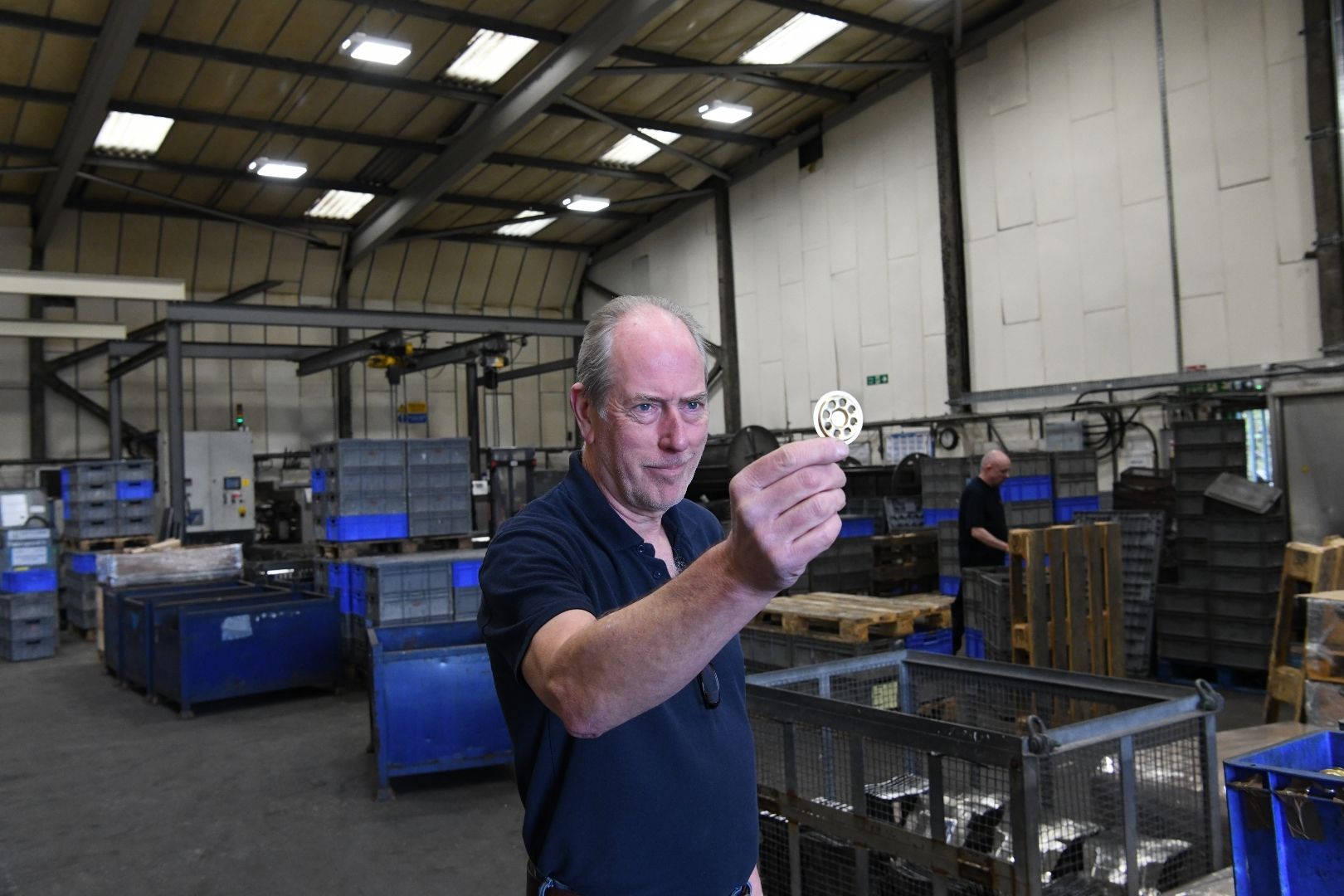
Fresh warnings from the Confederation of British Metalforming over new UK steel import tariffs have reinforced growing concerns across British manufacturing about material volatility, cost inflation and supply chain disruption.
The government’s decision to cut steel import quotas by 60 percent and impose tariffs of up to 50 percent on imports outside those caps is designed to strengthen domestic steel production and reduce reliance on overseas supply. However, downstream manufacturers in automotive, aerospace, construction and engineering are warning that the changes could create shortages, increase costs and force buyers to rethink how they use and process raw materials.
For Midland Deburr & Finish in Lye, the debate highlights a challenge already facing many precision manufacturers: how to maximise material yield and minimise waste when every sheet, pressing and machined component is becoming more expensive.
Managing director Chris Arrowsmith believes the pressure on margins will place greater emphasis on efficient finishing, cleaning and deburring processes that help manufacturers protect the value of every component moving through production.
He said: “When material prices become volatile, manufacturers naturally start looking much harder at waste, scrap rates and rework. That’s where finishing processes become commercially important.
“If you’ve invested heavily in steel, aluminium or precision-machined components, the last thing you want is parts being rejected because of inconsistent deburring, contamination or poor edge quality.”
Arrowsmith says the impact is likely to be felt particularly strongly across subcontract manufacturing, where suppliers are already balancing rising labour costs, energy costs and tighter quality requirements from OEMs.
He added: “Aerospace, automotive and precision engineering businesses are operating with very little margin for error. Material volatility only increases that pressure. Improving finishing consistency through vibratory deburring, solvent degreasing and vapour degreasing can help manufacturers reduce handling damage, improve repeatability and avoid unnecessary scrap.”
Midland Deburr & Finish has seen growing interest in automated and batch-based finishing systems from manufacturers looking to improve throughput while reducing dependence on labour-intensive manual finishing operations.
Vibratory deburring, in particular, is increasingly being used to process larger batches of components with consistent edge radiusing and surface finishing, helping manufacturers reduce secondary operations and improve production efficiency.
According to Arrowsmith, the technology becomes even more valuable during periods of material uncertainty.
He said: “If steel becomes more expensive or more difficult to source, manufacturers have to extract maximum value from every component they produce. Vibratory deburring gives businesses a far more controlled and repeatable process compared to manual deburring methods, especially at volume.
“What we do is all about about protecting dimensional integrity, improving downstream assembly performance and reducing the risk of costly rejection.”
Alongside deburring, component cleanliness is also becoming a bigger issue as manufacturers seek to maintain production quality while managing tighter supply chains and inventory controls.
Midland Deburr & Finish continues to support customers with solvent degreasing and vapour degreasing processes designed to remove oils, residues and contaminants from precision components before coating, assembly or inspection.
Arrowsmith said: “As material values rise, component cleanliness becomes more commercially important as well. If contamination leads to coating failure, assembly issues or rejected parts further down the supply chain, the cost impact is much greater than it was previously.
“That’s why we’re seeing more manufacturers take a closer look at degreasing standards, process consistency and how finishing fits into wider production resilience.”
The wider concern across UK industry is that rising material costs could accelerate the movement of manufacturing overseas if British processors and manufacturers lose competitiveness.
However, Arrowsmith believes the situation also creates an opportunity for UK manufacturers willing to invest in productivity, automation and process control.
He said: “British manufacturing has always been strongest when it focuses on quality, engineering capability and efficiency. Businesses that improve process control and reduce waste will be in a much stronger position to manage whatever happens with steel pricing or supply availability over the next few years.
“Finishing operations are sometimes overlooked in those conversations, but they can have a major impact on quality, throughput and material utilisation.”
Quick Contact Form