
Can Britain’s Automotive Supply Chain Pivot to Aerospace? The Opportunity Is Real, but So Is the Work Involved
Calls for Britain’s automotive supply chain to redirect capacity towards aerospace and defence raise an important question for UK manufacturing: how readily can a factory built around making car components begin supplying aircraft programmes?
The suggestion has emerged from major Jaguar Land Rover suppliers following the announcement of 4,000 job reductions at the vehicle manufacturer. Industry leaders have called for government support to help automotive manufacturers diversify into aerospace and defence, arguing that Britain already possesses much of the industrial capacity, equipment and engineering talent required.
For Midland Deburr & Finish, which provides specialist deburring, vibratory deburring, component cleaning, solvent degreasing and vapour degreasing services to manufacturers, there is considerable logic behind the proposal.
There is also an important distinction between possessing transferable manufacturing capability and becoming an established aerospace supplier.
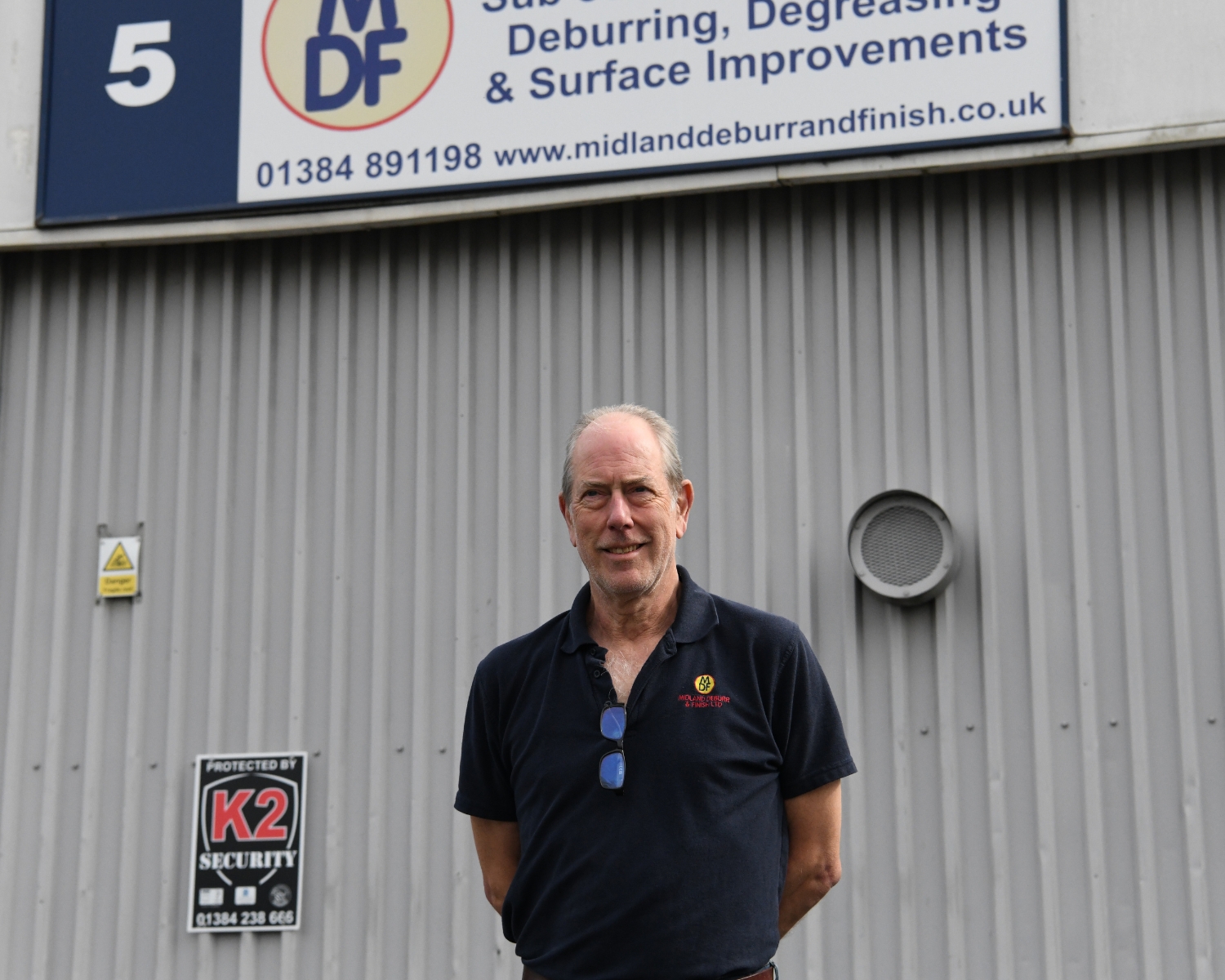
“The engineering skills sitting within the automotive supply chain are considerable,” said Chris Arrowsmith, Managing Director of Midland Deburr & Finish. “These businesses understand production engineering, machining, pressings, castings, surface finishing, quality and repeatability. A lot of that expertise has applications across aerospace and defence.
“The practical question is how we create a route that allows capable manufacturers to qualify for the work and build sustainable order books.”
The factory may transfer faster than the supply chain
At shopfloor level, there is significant crossover.
Automotive manufacturers routinely operate sophisticated CNC machining centres, presses, robotic cells, metrology equipment and automated production systems. Their supply chains encompass precision machining, metal pressings, castings, component finishing, deburring and industrial cleaning.
Many of those capabilities also sit within aerospace manufacturing. A machined aerospace component still needs edges and surfaces brought within drawing requirements. Components may require carefully controlled deburring before subsequent manufacturing, treatment or assembly operations. Depending on the component, specification and customer requirements, manufacturers can also require controlled cleaning and degreasing processes.
This is familiar territory for specialist subcontractors such as Midland Deburr.
Vibratory deburring, for example, provides manufacturers with a controlled method of processing suitable batches of components to remove burrs and improve edges and surfaces. Solvent degreasing and vapour degreasing can provide effective component cleaning where the specified process and material are appropriate.
The transferability of manufacturing knowledge is therefore genuine. The greater challenge lies around the systems surrounding the component.
Aerospace qualification changes the equation
Aerospace operates within an extensive quality-management and supplier-assurance framework.
The International Aerospace Quality Group's 9100 standard establishes quality-management-system requirements throughout aviation, space and defence supply chains. Certified suppliers are recorded through the industry's OASIS system. Aerospace requirements can extend into areas including configuration management, supplier control, product traceability, non-conformance management and First Article Inspection.
That distinction matters, because an automotive manufacturer may have machinery capable of producing an aerospace component while still requiring considerable work before becoming an approved supplier for a particular customer or programme.
Aerospace customers also place substantial emphasis on management of sub-tier suppliers. IAQG guidance covers the flow-down of quality requirements, production readiness, purchased-product verification, supplier monitoring and supplier surveillance.
That reaches directly into specialist processes, because if a component is machined by one company, deburring and degreasing are undertaken by another and a further treatment is performed elsewhere, the integrity of that manufacturing chain has to be maintained through appropriate specifications, approvals, records and controls.
“The important word is qualified capacity,” said Arrowsmith.
“You can have excellent machines and very experienced people, but aerospace customers understandably need confidence in the complete process behind the component. That includes how work is controlled, inspected, documented and passed through the supply chain.
“For businesses looking at diversification, understanding those requirements early would make the transition considerably more effective.”
Volume presents another adjustment
There is a second practical consideration: the economics of automotive and aerospace manufacturing are different.
Automotive supply chains have traditionally been built around comparatively high production volumes, short cycle times and intense cost control. Aerospace programmes can involve smaller batches, longer programme lives and significantly greater documentation and inspection requirements.
That has implications throughout a factory, because a production cell optimised to manufacture thousands of identical automotive components needs a different commercial model when processing lower volumes of higher-value aerospace parts with extensive quality documentation.
The same applies further down the supply chain. For a specialist finishing business, the attraction lies in being able to support different production models. Vibratory deburring can provide efficient batch processing where it is technically appropriate, while other components may require different deburring techniques dictated by geometry, material, drawing requirements or customer specification.
Similarly, solvent degreasing and vapour degreasing are manufacturing processes rather than universal solutions: the cleaning method has to be matched to the component, contamination, material, subsequent operation and applicable specification.
That process knowledge becomes increasingly valuable as manufacturers diversify.
Where government support could make a difference
This is perhaps where the suppliers' proposal deserves particularly close attention. Government cannot turn an automotive supplier into an aerospace supplier simply by identifying spare factory capacity. It can, however, help manufacturers overcome some of the practical barriers involved in diversification.
Support for quality-system development, accreditation, customer qualification, workforce training, capital equipment and supply-chain introductions could shorten the distance between having a transferable capability and winning production work.
The industry's existing requirements demonstrate why that bridge matters. Aerospace supplier management extends beyond the immediate Tier 1 relationship into sub-tier control, production readiness and the flow-down of customer requirements.
For manufacturers already operating sophisticated factories, that represents an achievable industrial development programme rather than a simple change of market.
Diversification rather than substitution
There is also a broader point for British manufacturing. Automotive, aerospace and defence do not need to be treated as competing destinations for the same industrial base.
A strong UK manufacturing economy benefits from companies capable of serving several markets. A business supplying automotive pressings or castings today may possess equipment and expertise applicable to aerospace, defence, rail, energy or other advanced manufacturing sectors.
Likewise, subcontract specialists in deburring, vibratory finishing, solvent degreasing, vapour degreasing and component cleaning can support customers operating across several industries.
That diversity can help maintain skills and productive capacity while giving manufacturers a broader customer base.
“The objective should be to retain good manufacturing businesses and give them access to more markets,” Arrowsmith added.
“We have generations of knowledge in machining, presswork, castings, finishing and production engineering across the Midlands. Aerospace and defence provide an opportunity to apply more of that capability, provided companies are given a realistic route into those supply chains.
“For companies such as Midland Deburr, our role is to keep developing the specialist deburring and degreasing capability that manufacturers need around their core production processes, whichever sector the finished component ultimately serves.”
A credible opportunity for the Midlands
The West Midlands is particularly well placed to explore that approach. Its automotive heritage has created an unusually concentrated network of manufacturers, toolmakers, precision engineers, metal finishers and specialist subcontractors. Redirecting part of that capability towards aerospace and defence could preserve productive assets while creating a more diversified regional manufacturing economy.
Machines can be redeployed. Engineering knowledge can transfer. Existing expertise in machining, pressings, castings, deburring, vibratory deburring and component degreasing can support a wider range of advanced manufacturing markets.
The practical work lies in qualification, customer approval, traceability, training and adapting the economics of factories built for one industry to the requirements of another.
If government and industry can build that bridge effectively, Britain's automotive supply chain may have an opportunity to become something broader: an advanced manufacturing supply chain capable of supporting automotive, aerospace, defence and the next generation of UK industrial programmes.
Quick Contact Form