
Reshoring gathers pace as UK manufacturers rebuild resilient supply chains
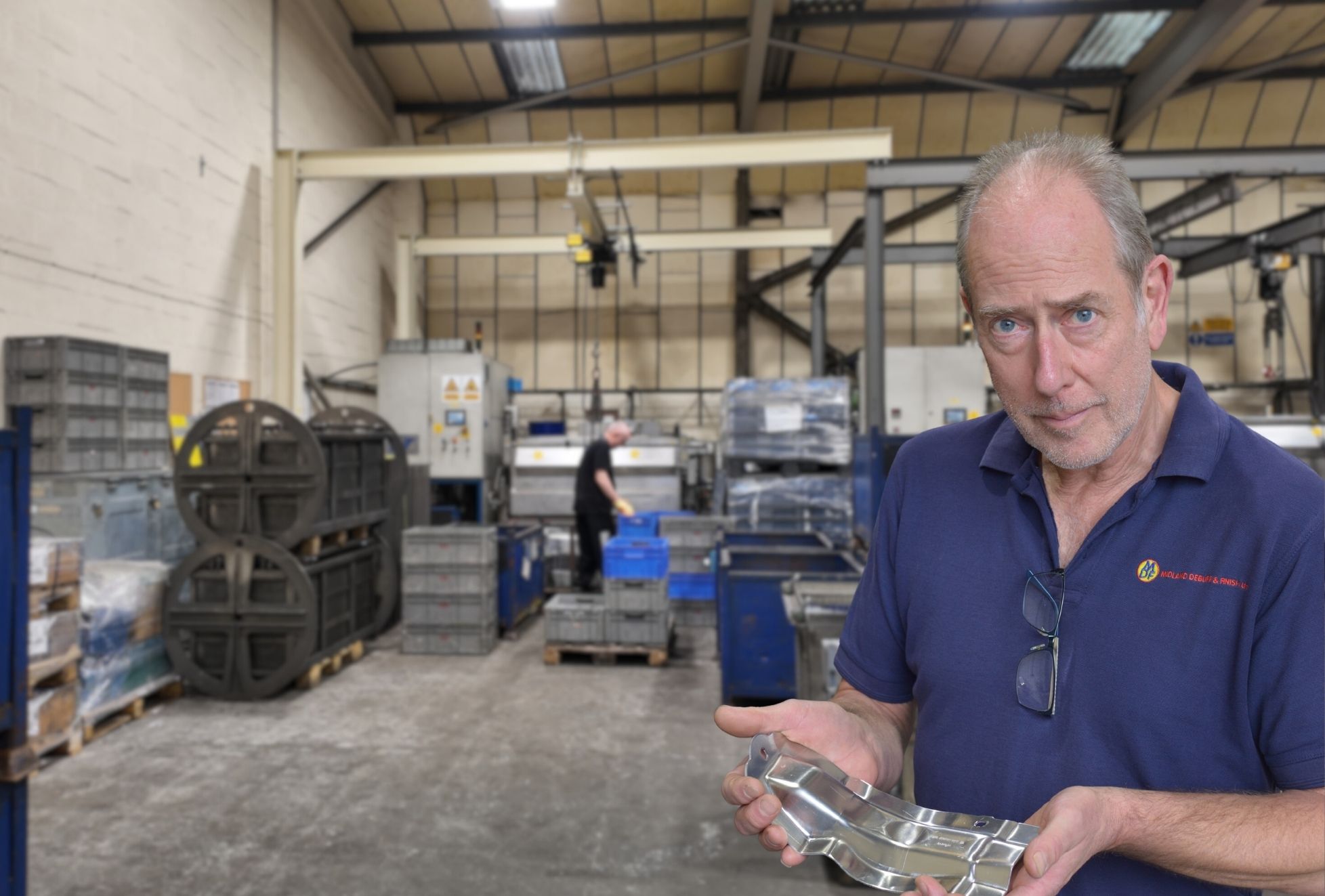
A quiet shift is underway across British industry. After decades of offshoring driven largely by labour arbitrage and globalised supply chains, a growing number of UK manufacturers are bringing production home — either in full or in carefully selected stages.
For companies operating in high-precision sectors such as automotive and advanced engineering, that decision is having a knock-on effect across the supply chain — particularly in specialist finishing services such as automotive component deburring, presswork deburr (and degrease), and advanced component degreasing processes.
At Midland Deburr & Finish in Lye, Managing Director Chris Arrowsmith says the change is tangible.
“We’re seeing a clear uptick in enquiries from manufacturers who want finishing partners based here in the UK,” says Arrowsmith. “Reshoring isn’t just about where you machine or press a part — it’s about securing every stage of the production process, including vibro deburring, vapour degreasing and final inspection.”
The original migration of manufacturing overseas in the 1980s and 1990s was primarily cost-led. Lower wages and improving infrastructure in Asia and Eastern Europe presented an attractive proposition for UK firms under margin pressure.
But recent years have exposed the fragility of extended supply chains.
Pandemic disruption, geopolitical instability and shipping volatility revealed how vulnerable long, complex logistics networks can be. Even relatively minor regional disruption can now halt production lines thousands of miles away.
“It doesn’t take a global crisis to cause problems,” Arrowsmith explains. “If a container is delayed or a border issue crops up, suddenly you’re waiting weeks for components that your customer needs tomorrow. By reshoring, manufacturers regain control.”
For finishing specialists like Midland Deburr, that means closer collaboration with OEMs and Tier suppliers who want UK-based support for automotive presswork deburr (and degrease) operations and precision component deburring.
Reshoring also brings quality assurance back within easier reach. In automotive and safety-critical applications, tolerances are tightening while traceability requirements are becoming more rigorous.
Processes such as vibro deburring and barrel deburring are increasingly specified not simply as aesthetic improvements, but as functional necessities — removing sharp edges that could compromise assembly, performance or operator safety.
Similarly, high-specification metal degreasing — including both vapour degreasing and controlled solvent degreasing — is essential to ensure components are free from oils and contaminants before coating, bonding or assembly.
“When production is overseas, you’re often relying on photographs and paperwork,” says Arrowsmith. “When it’s in the UK, you can visit the site, audit the process and build a proper partnership. That’s invaluable when you’re talking about critical automotive components.”
Midland Deburr has invested in dedicated lines capable of handling everything from high-volume pressings to complex machined parts, combining presswork deburr (and degrease) capability within streamlined workflows to reduce handling time and risk.
There is no denying that UK energy costs and labour rates remain comparatively high. However, the financial equation is shifting.
Rising wages in traditional offshore hubs, coupled with increasing automation in British factories, have narrowed the cost gap. When the hidden costs of disruption, inventory holding and quality failures are factored in, reshoring often looks more commercially viable than headline comparisons suggest.
“When you calculate the cost of a delayed shipment, scrapped parts or extended lead times, the savings from offshoring can disappear very quickly,” Arrowsmith notes. “Reshoring gives manufacturers predictability — and predictability has real financial value.”
For finishing operations, the ability to integrate component degreasing and deburring processes within a local, responsive supply chain reduces transport movements and compresses overall production timelines.
Environmental, social and governance (ESG) frameworks are also influencing boardroom decisions. Manufacturing remains energy-intensive, but reducing transport distances and consolidating processing stages domestically can significantly lower overall carbon footprints.
By performing automotive component deburring and degreasing operations in the UK — rather than shipping semi-finished goods abroad for secondary processing — manufacturers can cut embedded emissions and improve traceability.
“Sustainability isn’t a marketing add-on anymore,” says Arrowsmith. “Our customers want to demonstrate responsible sourcing and controlled processes. Keeping production — including finishing — close to home supports that objective.”
Few industry leaders view reshoring as a purely patriotic gesture. Instead, it is a strategic recalibration: balancing cost with resilience, flexibility and sustainability.
For Midland Deburr, the shift reinforces the importance of specialist finishing within the wider manufacturing ecosystem.
“If the UK is serious about rebuilding its manufacturing base, we need robust domestic capability at every stage — from pressing and machining through to barrel deburring and vapour degreasing,” Arrowsmith concludes. “Reshoring only works if the entire supply chain is strong. We’re proud to be part of that foundation.”
As British manufacturers reassess risk, cost and competitiveness in 2026, finishing processes once considered peripheral are now firmly recognised as critical links in a more resilient, reshored industrial chain.
For companies operating in high-precision sectors such as automotive and advanced engineering, that decision is having a knock-on effect across the supply chain — particularly in specialist finishing services such as automotive component deburring, presswork deburr (and degrease), and advanced component degreasing processes.
At Midland Deburr & Finish in Lye, Managing Director Chris Arrowsmith says the change is tangible.
“We’re seeing a clear uptick in enquiries from manufacturers who want finishing partners based here in the UK,” says Arrowsmith. “Reshoring isn’t just about where you machine or press a part — it’s about securing every stage of the production process, including vibro deburring, vapour degreasing and final inspection.”
The original migration of manufacturing overseas in the 1980s and 1990s was primarily cost-led. Lower wages and improving infrastructure in Asia and Eastern Europe presented an attractive proposition for UK firms under margin pressure.
But recent years have exposed the fragility of extended supply chains.
Pandemic disruption, geopolitical instability and shipping volatility revealed how vulnerable long, complex logistics networks can be. Even relatively minor regional disruption can now halt production lines thousands of miles away.
“It doesn’t take a global crisis to cause problems,” Arrowsmith explains. “If a container is delayed or a border issue crops up, suddenly you’re waiting weeks for components that your customer needs tomorrow. By reshoring, manufacturers regain control.”
For finishing specialists like Midland Deburr, that means closer collaboration with OEMs and Tier suppliers who want UK-based support for automotive presswork deburr (and degrease) operations and precision component deburring.
Reshoring also brings quality assurance back within easier reach. In automotive and safety-critical applications, tolerances are tightening while traceability requirements are becoming more rigorous.
Processes such as vibro deburring and barrel deburring are increasingly specified not simply as aesthetic improvements, but as functional necessities — removing sharp edges that could compromise assembly, performance or operator safety.
Similarly, high-specification metal degreasing — including both vapour degreasing and controlled solvent degreasing — is essential to ensure components are free from oils and contaminants before coating, bonding or assembly.
“When production is overseas, you’re often relying on photographs and paperwork,” says Arrowsmith. “When it’s in the UK, you can visit the site, audit the process and build a proper partnership. That’s invaluable when you’re talking about critical automotive components.”
Midland Deburr has invested in dedicated lines capable of handling everything from high-volume pressings to complex machined parts, combining presswork deburr (and degrease) capability within streamlined workflows to reduce handling time and risk.
There is no denying that UK energy costs and labour rates remain comparatively high. However, the financial equation is shifting.
Rising wages in traditional offshore hubs, coupled with increasing automation in British factories, have narrowed the cost gap. When the hidden costs of disruption, inventory holding and quality failures are factored in, reshoring often looks more commercially viable than headline comparisons suggest.
“When you calculate the cost of a delayed shipment, scrapped parts or extended lead times, the savings from offshoring can disappear very quickly,” Arrowsmith notes. “Reshoring gives manufacturers predictability — and predictability has real financial value.”
For finishing operations, the ability to integrate component degreasing and deburring processes within a local, responsive supply chain reduces transport movements and compresses overall production timelines.
Environmental, social and governance (ESG) frameworks are also influencing boardroom decisions. Manufacturing remains energy-intensive, but reducing transport distances and consolidating processing stages domestically can significantly lower overall carbon footprints.
By performing automotive component deburring and degreasing operations in the UK — rather than shipping semi-finished goods abroad for secondary processing — manufacturers can cut embedded emissions and improve traceability.
“Sustainability isn’t a marketing add-on anymore,” says Arrowsmith. “Our customers want to demonstrate responsible sourcing and controlled processes. Keeping production — including finishing — close to home supports that objective.”
Few industry leaders view reshoring as a purely patriotic gesture. Instead, it is a strategic recalibration: balancing cost with resilience, flexibility and sustainability.
For Midland Deburr, the shift reinforces the importance of specialist finishing within the wider manufacturing ecosystem.
“If the UK is serious about rebuilding its manufacturing base, we need robust domestic capability at every stage — from pressing and machining through to barrel deburring and vapour degreasing,” Arrowsmith concludes. “Reshoring only works if the entire supply chain is strong. We’re proud to be part of that foundation.”
As British manufacturers reassess risk, cost and competitiveness in 2026, finishing processes once considered peripheral are now firmly recognised as critical links in a more resilient, reshored industrial chain.
Quick Contact Form