
Finishing Strong: How Midland Deburr & Finish Is Helping UK Manufacturers Navigate Cost Pressures Through Precision Deburring
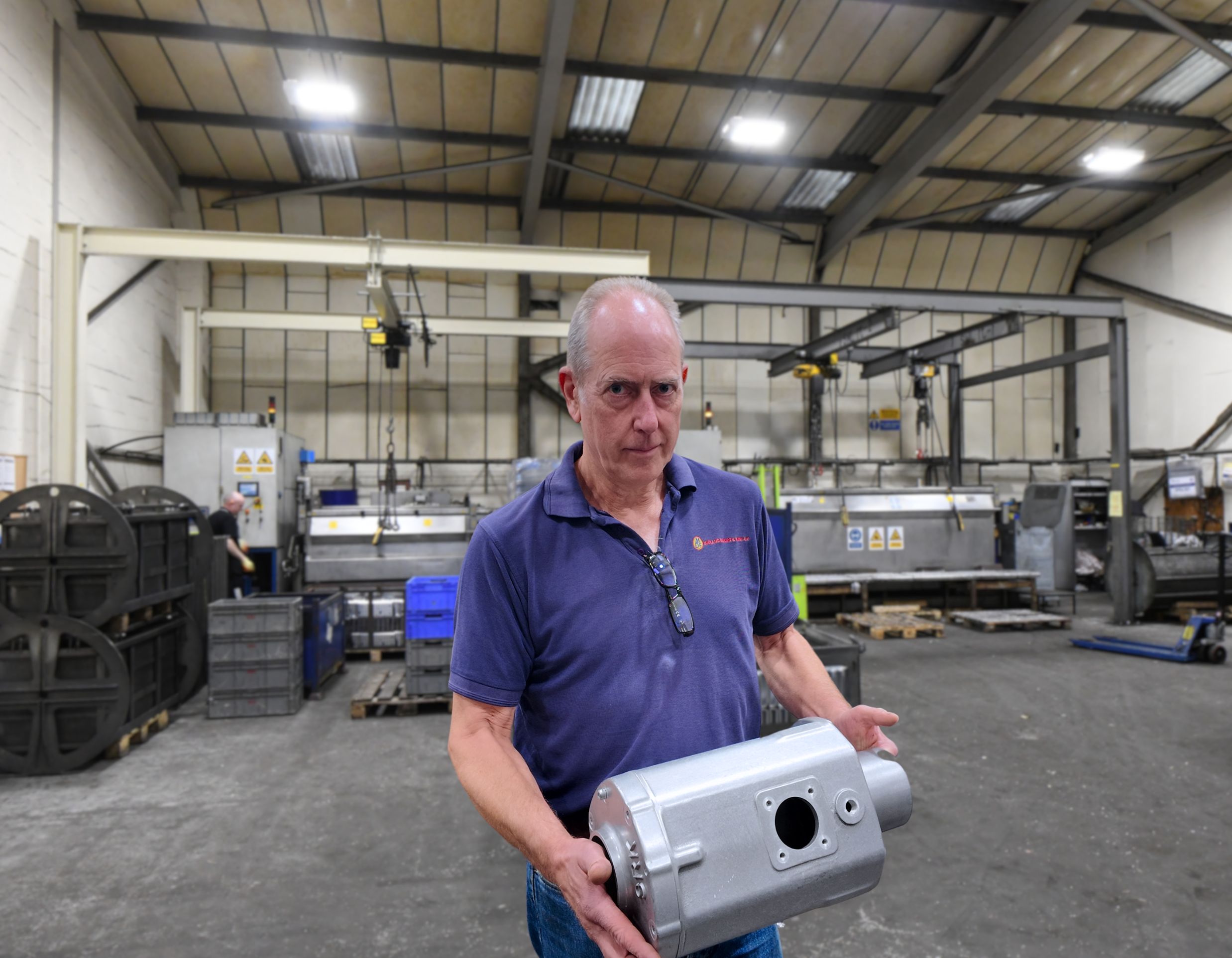
In the industrial heartland of the West Midlands, Midland Deburr & Finish is quietly reinforcing a critical, if often overlooked, stage of the manufacturing value chain: the removal of burrs.
As UK manufacturers navigate a volatile economic backdrop—marked by rising input costs, supply chain disruption and a recent return to output contraction—the role of reliable, repeatable finishing processes has come sharply into focus. In this environment, vibratory deburring is emerging not simply as a finishing step, but as a strategic enabler of efficiency, quality and cost control.
At its core, vibratory deburring is a mass finishing process designed to remove the microscopic imperfections left behind by machining, laser cutting or forming. Components are placed into a vibrating chamber alongside abrasive media, creating a controlled, continuous contact that smooths edges, removes burrs and refines surfaces at scale.
For Managing Director Chris Arrowsmith, the importance of this process is often underestimated.
“Burrs might be small, but their impact isn’t,” he explains. “In automotive and aerospace applications, you’re dealing with components where edge quality directly affects performance, safety and longevity. If you leave a burr in place, you’re potentially introducing a stress concentration point or a failure risk further down the line.”
That functional importance is becoming more pronounced as manufacturers contend with tighter margins and rising costs. With UK input price inflation hitting multi-year highs—driven by energy, logistics and geopolitical instability—there is little room for inefficiency or rework.
“Manufacturers can’t afford waste in the current climate,” Arrowsmith continues. “Vibratory deburring gives you repeatability. You can process hundreds or thousands of parts in a single cycle, with consistent results batch after batch. That reduces manual intervention, lowers labour costs and, crucially, minimises the risk of defects escaping into the supply chain.”
The process itself is deceptively simple. Vibratory machines use a motor with offset weights to generate a controlled motion, moving media and components in a toroidal flow. This ensures uniform contact across all surfaces, gradually breaking sharp edges and refining finishes. Whether operated wet or dry, the outcome is governed by a careful balance of media selection, compound chemistry and cycle time.
It is here that Midland Deburr & Finish has built its expertise.
“Media selection is absolutely critical,” says Arrowsmith. “Ceramic media gives you aggressive cutting for harder metals, plastic media is better for precision work and surface preparation, and steel media is ideal when you’re looking to burnish or improve surface brightness. The wrong choice can either under-process a part or damage it—so understanding the application is everything.”
That application knowledge is particularly relevant in sectors such as aerospace, where surface integrity and fatigue performance are non-negotiable, and automotive, where volume and cost efficiency must coexist.
“In aerospace, you’re often looking at edge conditioning to improve fatigue life and eliminate micro-cracks,” he notes. “In automotive, it’s about throughput and consistency—ensuring every component meets specification without slowing production. Vibratory processes can do both, but only if they’re properly controlled.”
Against a backdrop of weakening business confidence and tightening labour markets, automation and process reliability are becoming increasingly valuable. The latest PMI data points to falling employment and cautious production planning, trends that place further emphasis on scalable, low-labour solutions.
“Labour availability is a real issue for many manufacturers,” Arrowsmith adds. “What vibratory deburring offers is a way to maintain output quality without relying heavily on manual finishing. Once the process is dialled in, it runs consistently. That stability is incredibly important when everything else in the market feels uncertain.”
There is also a broader supply chain dimension. As delivery times lengthen and material shortages persist, manufacturers are under pressure to extract maximum value from every component produced.
“If you’re already facing delays and higher material costs, the last thing you want is scrap or rework because of poor finishing,” he says. “Deburring becomes part of your risk mitigation strategy—it helps ensure that what you produce is fit for purpose first time.”
While often positioned as a downstream operation, vibratory deburring is increasingly being integrated closer to primary manufacturing processes, sitting alongside CNC machining and cutting operations as a standardised step in production flow.
For Midland Deburr & Finish, that shift reflects a wider recognition that surface finishing is not merely cosmetic, but fundamental to product performance.
“In today’s environment, manufacturers are looking at every stage of production through the lens of efficiency and reliability,” Arrowsmith concludes. “Deburring is no exception. When done properly, it protects quality, reduces cost and supports throughput. And in a high-cost, high-pressure market, that’s exactly what industry needs.”
As UK manufacturing navigates an uncertain path shaped by geopolitical tension and economic pressure, it is often the less visible processes—like vibratory deburring—that provide the stability and consistency required to keep production moving.
Quick Contact Form