
Midland Deburr & Finish Well Positioned at the Sharp End of £4.6bn UK Automotive Opportunity
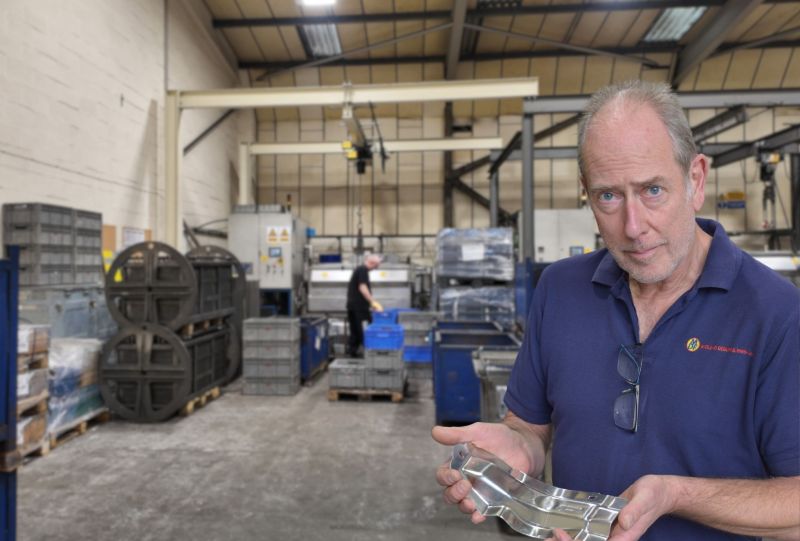
As the UK automotive sector sets its sights on a £4.6 billion supply chain opportunity, manufacturers across the Midlands are being called upon to deliver not just volume, but precision, consistency and compliance at scale. For Midland Deburr & Finish Ltd in Lye, that shift is already well underway.
New analysis from the Society of Motor Manufacturers and Traders (SMMT) highlights an 80% increase in demand for UK-sourced automotive components by 2030, driven largely by electrification, localisation strategies and geopolitical pressures. While much of the headline growth centres on batteries, electric motors and power electronics, the reality for manufacturers on the ground is that every component—whether part of a battery casing or a chassis assembly—must meet ever tighter finishing and cleanliness standards.
Chris Arrowsmith, Managing Director of Midland Deburr & Finish, believes this is where a critical, often overlooked capability comes into play.
“Everyone talks about batteries, motors and electronics, but none of those components leave the factory without going through a finishing process,” he explains. “Deburring is fundamental. If you’re increasing output by 80%, you also need to guarantee that every edge is safe, every surface is clean and every part is consistent. That’s not optional—it’s audited.”
Finishing Moves from Background to Bottleneck
As OEMs and Tier 1 suppliers accelerate localisation efforts, the pressure is cascading down the supply chain. Pressings, machined parts, castings and fabricated assemblies—all highlighted by SMMT as core growth areas—require high-quality deburring and degreasing before they can move to coating, assembly or final installation.
For EV platforms in particular, tolerances are tightening. Components such as battery enclosures, cooling systems and electronic housings demand clean edges and contaminant-free surfaces to ensure performance and safety.
“Surface preparation is becoming a gating factor,” says Arrowsmith. “You can invest millions in machining or forming, but if parts arrive with burrs, sharp edges or residual oils, they simply won’t pass downstream processes like coating or assembly. That’s where specialist providers like us come in.”
Vibratory Deburring Scales with Demand
At its Lye facility, Midland Deburr & Finish has seen sustained growth in demand for vibratory deburring and metal degreasing, particularly from automotive suppliers looking to scale production without compromising quality.
The company’s investment in a wide range of vibratory bowls, media and compounds allows it to process everything from small precision components to larger pressings—handling materials including ferrous and non-ferrous metals, as well as plastics.
“Automation is key,” Arrowsmith notes. “You can’t meet EV-driven volumes with manual finishing. Vibratory processes give you repeatability, scalability and the ability to handle batch sizes from one-offs to thousands of parts, all with consistent results.”
Supporting the Shift to Electrification
The SMMT’s “Opportunity Auto” campaign underscores the UK’s ambition to remain a global automotive leader, with production targets of 1.3 million vehicles annually by 2035. With demand for electric drive systems expected to surge by more than 350%, and battery-related manufacturing set to triple, the supporting supply chain must evolve rapidly.
Midland Deburr & Finish sees its role as enabling that transition—not just through capacity, but through process reliability.
“Electric vehicles bring new materials, new geometries and new expectations,” says Arrowsmith. “Deburring isn’t just about removing sharp edges anymore—it’s about ensuring component integrity, preventing fatigue, improving coating adhesion and ultimately supporting the performance of the final vehicle.”
A Local Capability for a Global Market
With government-backed initiatives such as DRIVE35 and continued private investment from major OEMs, the UK’s automotive supply chain is entering a critical phase of growth and transformation. For regional specialists, the opportunity lies in delivering the high-quality, value-added processes that underpin advanced manufacturing.
“Reshoring only works if the capability is here,” Arrowsmith concludes. “The UK has the engineering expertise, but finishing has to be part of that conversation. If we get that right, this £4.6 billion opportunity is absolutely achievable.”
As the industry moves forward, it is increasingly clear that success will not be defined solely by what is made—but by how well it is finished.
Quick Contact Form