
'Engineer consistency into manufacturing performance’ - Midland Deburrs call for National Productivity Week
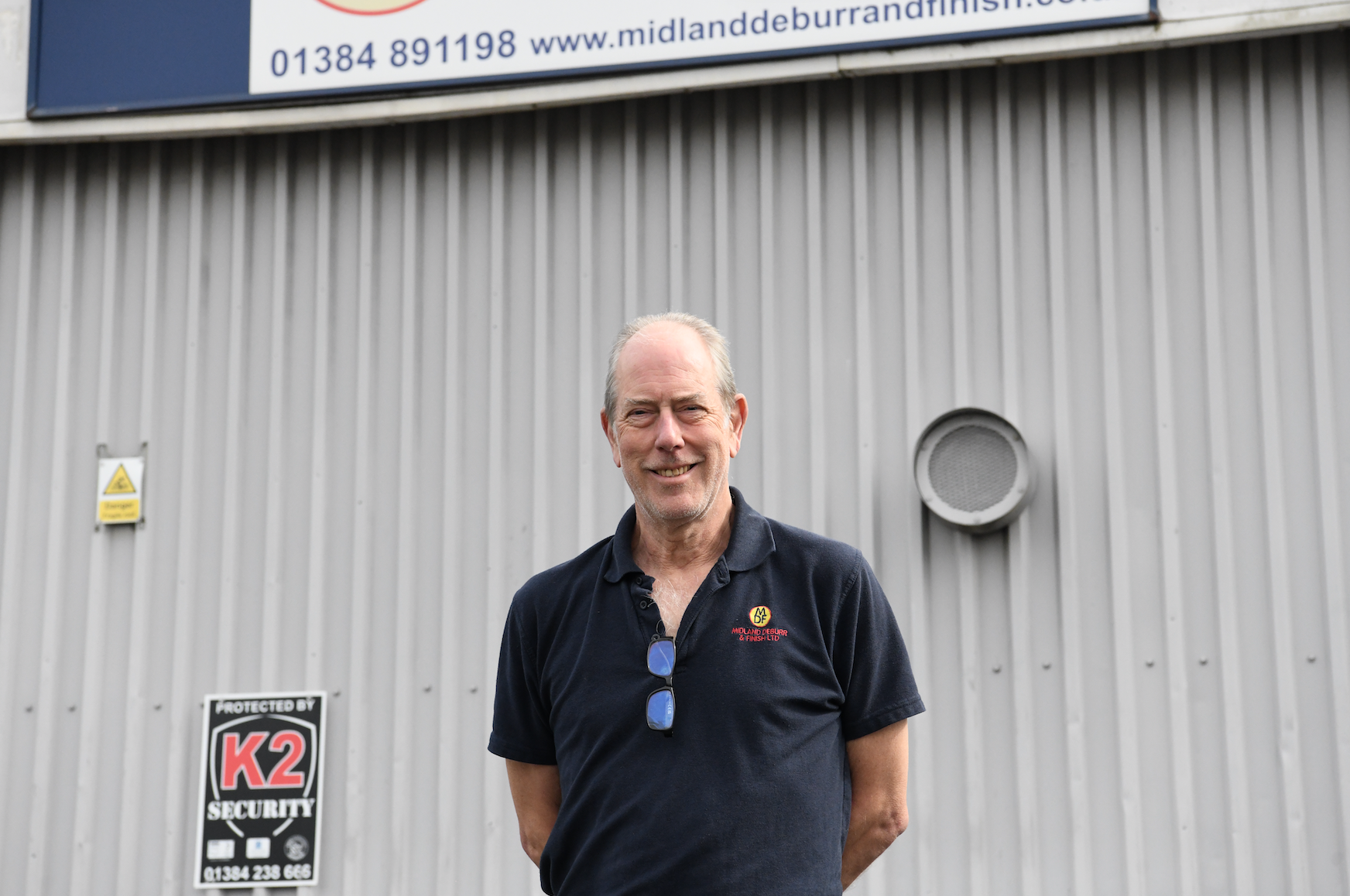
As the UK marks National Productivity Week, manufacturers are being urged to rethink what productivity really means on the shopfloor — and for Midland Deburr & Finish in Lye, that starts with finishing processes that are too often overlooked.
While productivity is traditionally framed as output versus input, managing director Chris Arrowsmith believes the real gains lie in eliminating inconsistency, reducing rework and enabling operators to deliver repeatable quality at scale.
“Productivity is about building processes that deliver the same result, every time, without firefighting. In our world, that comes down to how well you control deburring and cleaning.”
Finishing moves from bottleneck to enabler
Across UK manufacturing, processes such as deburring and degreasing have historically been treated as secondary operations — often manual, time-intensive and prone to variation.
But as tolerances tighten in sectors such as aerospace, automotive and precision engineering, those finishing stages are increasingly defining overall productivity.
“Where productivity is won or lost today is in the detail,” Arrowsmith explains. “You can machine a component perfectly, but if your deburring process is inconsistent, you introduce risk, rework and delays further down the line.”
Midland Deburr & Finish has seen growing demand for vibratory deburring and metal degreasing as manufacturers look to stabilise output and remove variability from their processes.
Reducing variability, not just cycle times
The theme of this year’s National Productivity Week — redefining performance — reflects a broader shift across industry: away from simply doing more with less, and towards building resilient, repeatable systems.
For Arrowsmith, this aligns closely with what customers are asking for.
“The biggest enemy of productivity is inconsistency,” he says. “Manual deburring introduces variation between operators, between shifts, even between batches. That’s where you lose time and margin.”
By contrast, automated and batch-based finishing processes allow manufacturers to standardise outcomes, reduce reliance on manual intervention and free up skilled labour for higher-value tasks.
“It’s about taking variability out of the equation,” he adds. “Once you do that, everything else becomes easier to control — quality, throughput, delivery performance.”
Supporting a more competitive UK supply chain
The focus on productivity comes at a critical time for UK manufacturing, with supply chains under pressure to reshore capability, improve efficiency and compete globally.
According to Arrowsmith, finishing processes have a key role to play in that transition.
“If the UK is serious about building a more competitive and resilient manufacturing base, we need to look at every stage of production,” he says. “Deburring and cleaning have a direct impact on quality, compliance and lead times.”
He argues that investing in the right finishing technologies can help manufacturers unlock capacity without additional capital expenditure in core machining.
“You don’t always need another machine tool to improve productivity,” he notes. “Sometimes, you need to fix what happens after the machining is done.”
A more human approach to productivity
Reflecting the wider conversation during National Productivity Week, Midland Deburr & Finish is also keen to emphasise the role of people in driving performance.
“Technology is an enabler.” Arrowsmith says. “The goal is to give operators processes they can trust— systems that work first time, every time — so they can focus on adding value rather than correcting problems.”
As UK manufacturers continue to navigate rising costs, skills shortages and increasing regulatory demands, the message from Lye is clear: productivity gains will come not from headline investments alone, but from the cumulative impact of smarter, more consistent processes across the factory floor.
“Productivity is about working smarter,” Arrowsmith concludes. “And sometimes, the smartest move is to take a step back and fix the fundamentals.”
Quick Contact Form