
Steel Uncertainty Puts Greater Focus on Finishing Efficiency, Says Midland Deburr & Finish
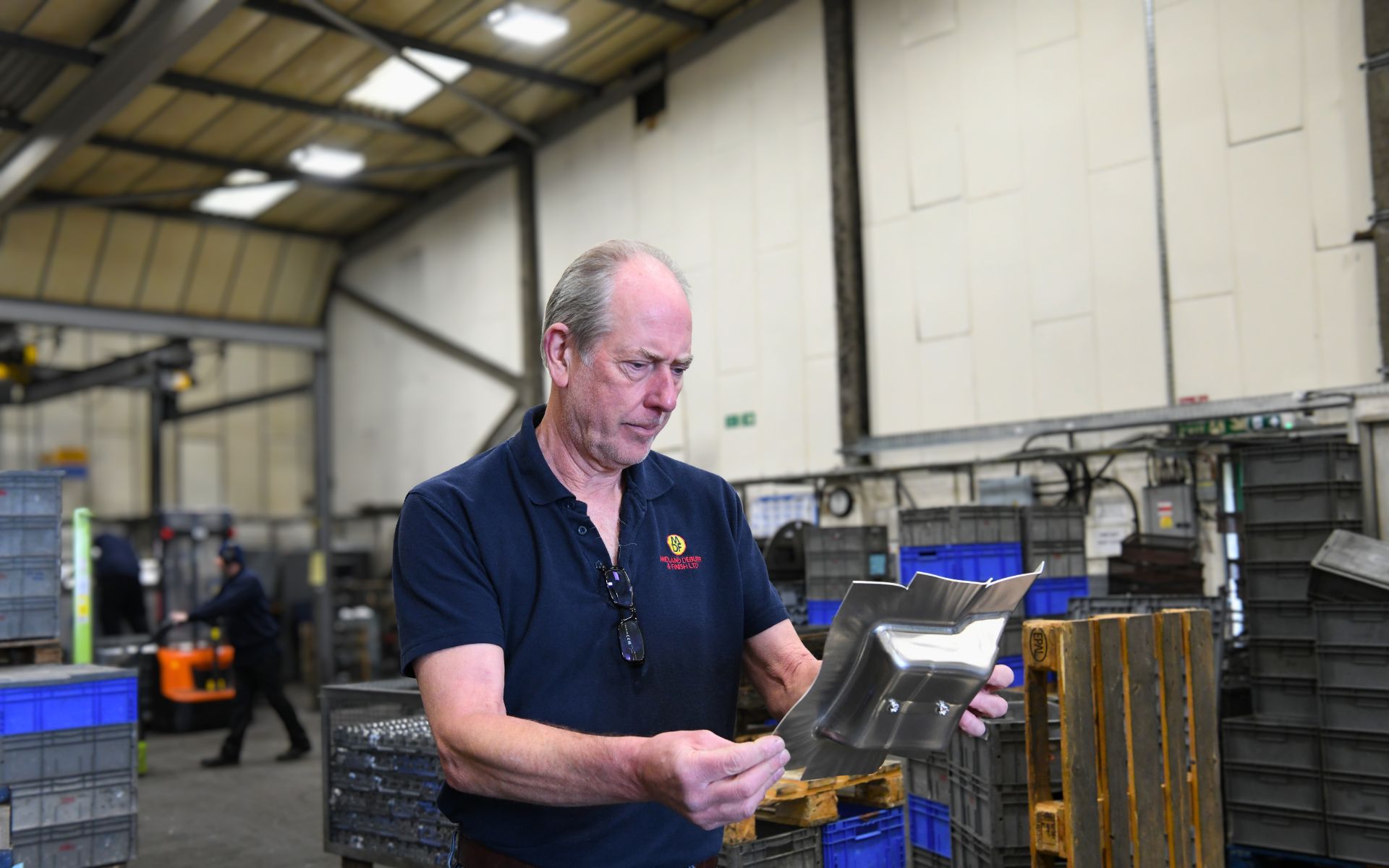
As Britain's manufacturers grapple with a more uncertain steel market, attention is increasingly turning to how every tonne of material can be used more effectively. With import restrictions, fluctuating prices and ongoing supply chain pressures affecting procurement strategies, reducing waste has become as important as securing supply.
For many engineering businesses, that means looking beyond the purchasing department and examining every stage of production to ensure valuable materials are not lost through unnecessary scrap, rework or rejected components.
Lye-based surface finishing specialist Midland Deburr & Finish believes finishing processes have an increasingly important role to play in helping manufacturers protect margins during a period of material volatility.
The comments come as industry bodies continue to warn that changes to UK steel import arrangements could make certain grades more difficult or expensive to source, particularly for manufacturers serving sectors such as aerospace, automotive and precision engineering.
Chris Arrowsmith, Managing Director of Midland Deburr & Finish, said manufacturers are becoming far more focused on the lifetime value of every component entering production.
"Material costs have become a much bigger conversation over the past few years," he said. "When manufacturers are paying more for steel, aluminium and other specialist materials, they naturally expect to recover as many finished components as possible from every production run.
"That puts greater emphasis on processes that improve consistency and reduce the likelihood of parts being rejected later in the manufacturing cycle."
While machining and fabrication often receive the greatest attention, Arrowsmith believes deburring and cleaning should also be viewed as critical quality processes rather than secondary finishing operations.
Even minor burrs, sharp edges or surface contamination can affect assembly, coating performance or inspection, potentially resulting in expensive rework after significant manufacturing value has already been added.
"By the time a component reaches the finishing stage, a considerable amount of time, machining and material has already been invested," he explained. "If a part fails because it hasn't been properly deburred or cleaned, the cost extends far beyond the finishing process itself."
Midland Deburr & Finish works with manufacturers across aerospace, automotive, defence, electronics and general engineering, providing vibratory deburring, vapour degreasing, solvent degreasing, ultrasonic cleaning and component impregnation services.
The company has seen growing demand from customers looking to introduce greater repeatability into finishing operations, particularly where higher production volumes make manual processing increasingly difficult to control.
According to Arrowsmith, vibratory deburring offers manufacturers a practical way to improve consistency while reducing the variability often associated with manual finishing methods.
"Consistency becomes incredibly valuable when margins are under pressure," he said. "A controlled vibratory deburring process produces repeatable edge quality across large batches of components, helping customers reduce secondary operations and maintain the standards their own customers expect."
Component cleanliness is also becoming a greater priority as manufacturers work to improve quality assurance throughout increasingly complex supply chains.
Residual machining oils, swarf and other contaminants can interfere with coating adhesion, assembly processes and final inspection, making effective cleaning an essential part of modern manufacturing.
Midland Deburr & Finish continues to support customers with both solvent degreasing and vapour degreasing processes that remove contaminants from precision-engineered components before they progress to the next stage of production.
"Cleanliness is no longer simply about presentation," said Arrowsmith. "Many of the industries we support have increasingly demanding quality requirements, so manufacturers need confidence that components are consistently clean before coating, assembly or inspection.
"As the value of every component increases, preventing failures further down the production process becomes even more important."
Although uncertainty surrounding steel availability continues to concern many manufacturers, Arrowsmith believes it also reinforces the importance of investing in efficient production processes that maximise material utilisation and minimise avoidable waste.
"British manufacturers have always been exceptionally good at adapting to changing market conditions," he said. "Whether material prices rise or supply becomes tighter, businesses that focus on process control, quality and productivity will always be in the strongest position.
"Finishing may be one of the final stages of production, but it has a significant influence on product quality, manufacturing efficiency and ultimately the value manufacturers achieve from every component they produce."
Quick Contact Form